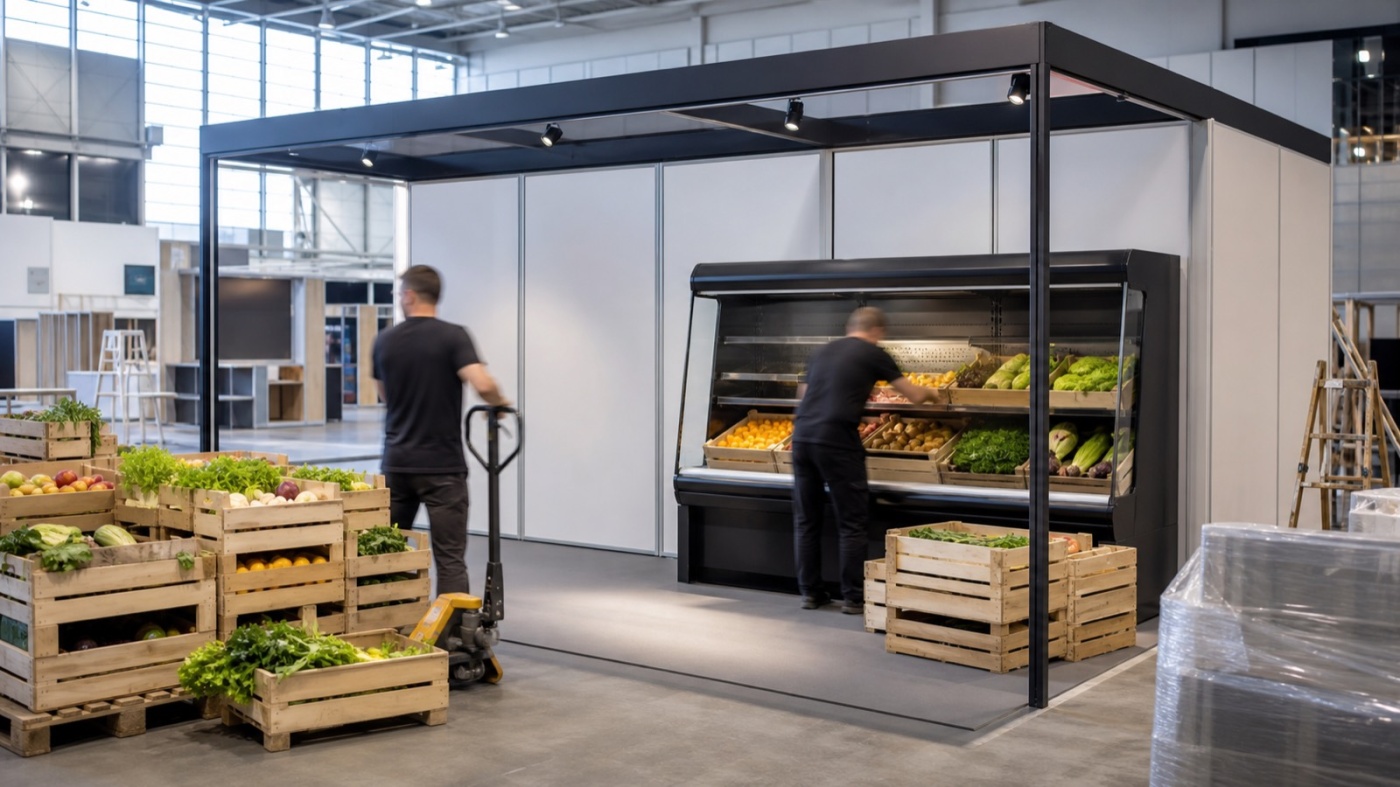
Early February turns the Berlin exhibition grounds into the largest trading floor of the fresh produce business. Growers, importers, technology suppliers and logistics providers from more than 90 countries meet at Fruit Logistica, and a large share of the exhibits sits fresh on the table. That single fact turns stand planning here into a logistics discipline.
Three days, a full site, an audience that comes to buy
Fruit Logistica occupies almost the entire site near the Berlin Funkturm. Depending on the edition, more than 2,600 exhibitors from over 90 countries present their range, while around 67,000 trade visitors arrive to source, negotiate and compare. The offer is grouped into clear segments: Fresh Produce on one side, Machinery & Technology together with Logistics on the other, plus focus areas such as Smart Agri and Greenhouse.
Two consequences follow for exhibitors. Your audience sits concentrated in a few halls, which makes the choice of location more decisive than square metres alone. And everything compresses into three show days: meetings run in quarter-hour slots, tastings happen alongside, and the produce on display should look as appetising at nine in the morning as it does late in the afternoon. A stand that delivers this is planned from the loading ramp inwards.
The delivery slot shapes the rest of the week
Access to the grounds during build-up and dismantling follows a fixed system: vehicles enter through registered, pre-booked loading slots in the Messe Berlin booking portal, and everyone involved carries a personalised build-up and dismantling pass. The organiser publishes a traffic guide for each edition covering gates, waiting areas and time windows, and those current documents remain the binding reference.
In practice this means: book the slot as soon as the exhibitor area releases it, and match it to your hall rather than to the hour that suits the driver. Parts of the Berlin site use two-storey halls. With a stand on the upper level, delivery runs through goods lifts, and every pallet needs its own rhythm. A loading list per vehicle, defined pallet dimensions and one named contact reachable by phone at the gate save more time here than any speed on the motorway.
Structure first, fresh produce last
Messe Berlin splits build-up into two phases: several days of construction work, followed by a dedicated decoration window shortly before opening. For the fresh produce sector that split is a gift, as soon as the stand concept uses it consistently.
A modular system stand plays to exactly this rhythm. Aluminium frames connect without tools, textile skins and graphics arrive pre-finished, LED tiles already match the frame grid. The shell stands early, and the final day belongs to the goods: variety comparisons, fruit displays, chilled cabinets, tasting counters. Our overview of exhibition stand services shows how design, production and assembly interlock.
Give the decoration day the same care as the build itself. Who delivers the produce, who receives it, where it rests until placement and who arranges it belongs on one sheet with names and times.
Chilling, water and waste during the show days
Fresh exhibits call for technical services on the stand, and those come from the organiser. Chilled cabinets and refrigerators need a properly rated power supply with its own circuit protection, tasting areas need water and drainage. Both run through the Messe Berlin ordering portals and follow their own deadlines, published for each edition. An early look into the exhibitor manual creates clarity here.
Plan for daily replenishment as well. A chilled storage room on the stand keeps the cycle of refilling, cooling and clearing behind the back wall, even at a few square metres. Waste deserves the same attention: peel, stones, cardboard and dry ice accumulate every day, and the morning stand cleaning covers part of it.
One detail with a large effect: schedule refills for the quiet minutes right after the halls open and around midday. That keeps the floor free for conversations during peak hours.
On the final day, sequence decides everything
Perishable goods go to donation, further use or proper disposal, technical equipment goes into cases, system parts travel on pallets. A modular stand then returns to the warehouse, where it is inspected, cleaned and booked in for the next edition. Across several show years this cycle lowers the cost per appearance noticeably, and it documents itself cleanly, which sustainability reporting increasingly calls for. More on that on our page about sustainable exhibition stands.
Departure follows the same slot logic. A slot booked early for dismantling day shortens the wait at the gates considerably.
What counts in the end: time to talk
At Fruit Logistica the impression on your stand takes shape days before the doors open: in the loading slot, the power order, the chilled unit, the storage room behind the back wall. Think that chain through early and you gain the scarcest resource of a three-day fair.
Upcoming editions and further leading trade fairs are listed in our trade fair calendar. To discuss a Berlin appearance in concrete terms, your preferred hall, floor area, product display and required services are enough for a first solid proposal.