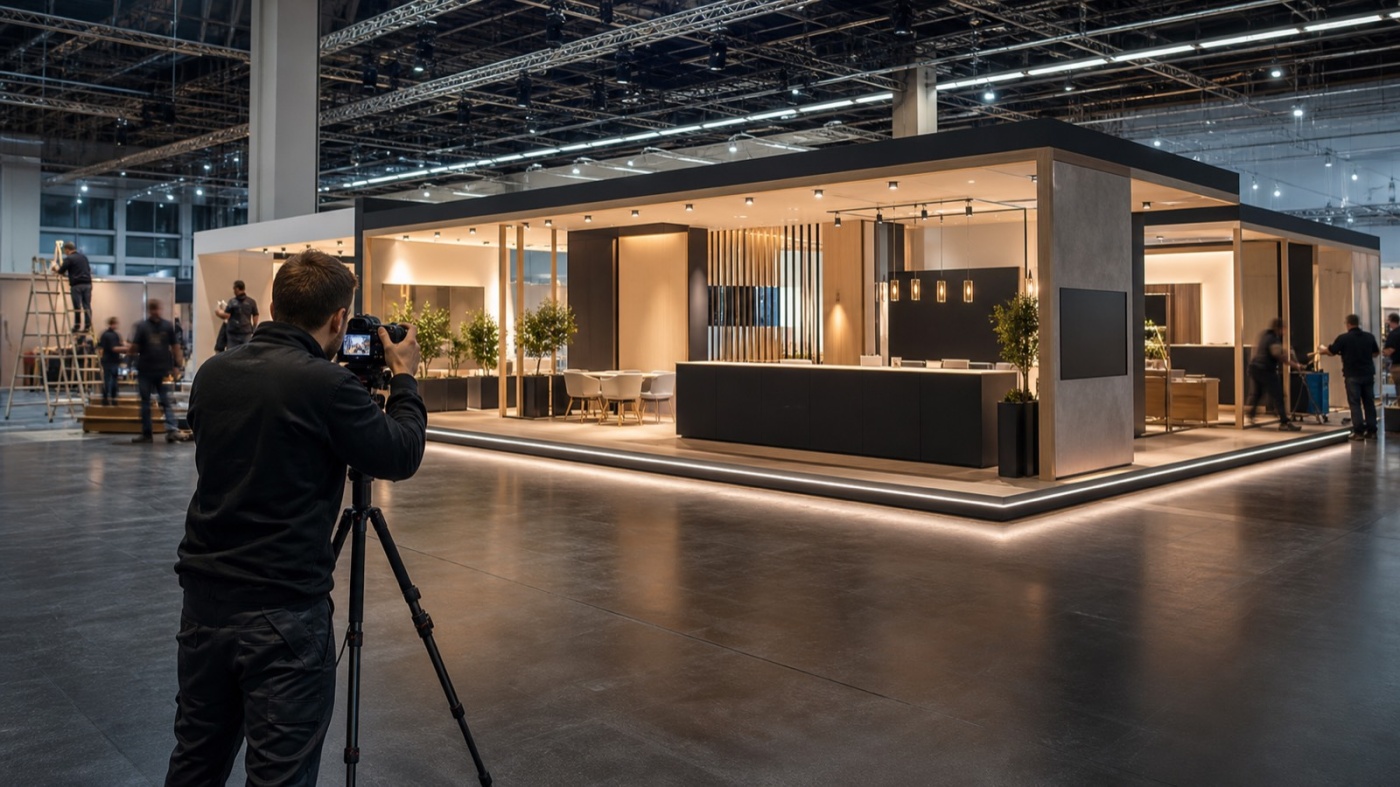
The stand is up for three days; the images from it work for three years. Website, social media, sales decks and the application for next year's floor space all draw on the same material. That makes it worth planning your picture day in advance rather than leaving it to chance.
The shot list grows out of where the images will be used
Start at the end: where do these pictures need to appear later? That single question produces a surprisingly concrete list.
Six groups of shots cover what most exhibitors need:
- The architectural shot. The full stand seen from the aisle, tidy and free of people. This is the image that later carries your project page, press kit and floor space application.
- The atmosphere. A busy stand at peak hour, conversations at the counter, visitors gathered around an exhibit. It shows resonance, and resonance is what convinces the next budget meeting.
- The detail. Material joints, light edges, graphic panels, logo wall, counter front. These frames feed social media and explain quality faster than any paragraph.
- The exhibit. Product staged and cleanly lit, with and without someone operating it.
- The team. Portraits against the same stand graphic, matching clothing, matching crop. That set keeps website and sales material going for a year.
- The moment. A talk, a signing, an award, a notable visitor.
Define the formats as well. A landscape frame carries the website header, while portrait versions in 4:5 and 9:16 serve social media and short video. Ask for both up front and you receive both, instead of rescuing a crop afterwards.
Turn that into a schedule with actual times. Tell your photographer explicitly which single image is meant to carry the homepage. That one instruction improves the result more than an extra hour on site.
Light, time slots and access in the hall
Hall lighting is mixed lighting: cool light from the ceiling, warm spots on the stand, coloured LED surfaces and often daylight through roof strips. A manual white balance and RAW capture keep your corporate colours accurate, which matters especially for reds and oranges.
Architectural images happen before doors open or in the final hour of the show day, when the aisles thin out. Arrange early access with the organiser in good time. Many venues also require accreditation for photographers and video crews and set rules on tripods, flash and drones. A few minutes in the exhibitor documents settles all of it.
For video, sound decides. A lavalier or shotgun microphone lifts the voice out of the hall's constant background level, which a camera alone rarely manages. Plan for calm as well. In practice one focused block on the first show day covers the core list, leaving room afterwards for the moments that arise on their own.
Rights: people, brands and images
As soon as people are recognisable, personality rights apply. In Germany this rests on Section 22 of the Copyright in Works of Art Act alongside the General Data Protection Regulation, and comparable rules exist across Europe. Consent is the standard case for publication. Exceptions exist, for instance where people appear incidentally beside the stand architecture or as part of a larger gathering. Individual portraits and close-ups intended for advertising call for clear agreement.
Three building blocks work well on the stand.
For your own staff, a written consent, given voluntarily and revocable at any time, naming the media and the period of use. For guests, a short consent on paper or tablet whenever someone is photographed deliberately. And a clearly visible notice at the stand entrance stating that photography and filming take place that day; it satisfies the duty to inform and supports the consent, while rarely replacing it.
A clean archive matters here. Anyone who withdraws consent is entitled to have the image taken out of use, and that only works if you store pictures, people and releases together. The contact consent you collect during lead capture at the stand runs separately and stands apart from photo consent.
Two further points slip through easily. Neighbouring stands and third-party brand marks in the background can be avoided elegantly through the choice of framing, and a quick word with your neighbour settles the rest. Music in video needs a proper licence; a well-known track under your show film becomes expensive fast.
Finally, settle usage rights with the photographer in writing before travel: unlimited in time and territory, across all media, including editing and passing images on to press and organiser. It costs little in negotiation and saves an entire discussion in year three.
Turning three show days into a year of content
The biggest lever sits in how you use the material. Start during the fair itself: a small selection reviewed and posted in the evening reaches exactly the trade visitors still on site.
After dismantling, the same material keeps working. It fills a project page among your references, illustrates a case study with figures from the follow-up, supports sales in quotes and presentations, accompanies the newsletter to every contact made at the show and strengthens the application for a better location next year. Recruiting benefits too, because pictures of the team at work say more than a job description.
From the video footage you typically get one short film of around a minute for the website plus several cutdowns for social media, all with subtitles, since most viewers start without sound.
Close by building an archive that still works in two years. Clear naming by show, year and subject, plus photographer, consent and release recorded in the metadata, keeps everything findable when the next edition comes around.
Images that keep working long after the show
Photography at a trade fair is part of stand planning rather than an add-on. Clarify shot list, time slots, consents and usage rights before you travel, and you return with material that carries a full year and supports your next application.
There is a useful side effect: this preparation improves the stand itself. Once you decide which perspective forms the hero image, stand graphics, lighting and tidy zones move earlier into the design. Our exhibition stand services show how those pieces come together.