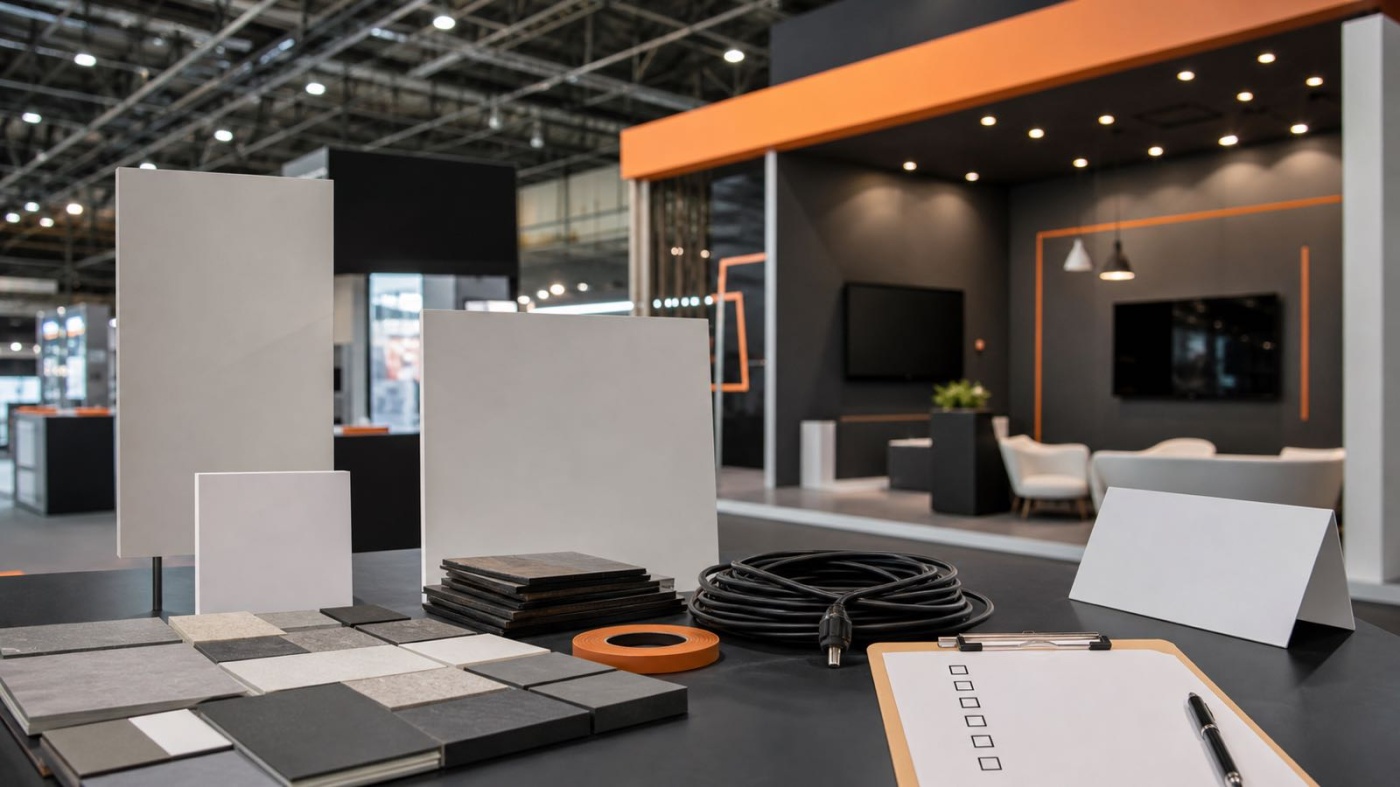
Your first trade fair appearance is a big step for many companies. There is a floor space to fill, a date to keep and a budget to watch, and all of it often has to happen alongside the day-to-day business. What should you pay particular attention to the first time around so that the effort turns into a visible result? The good news is that most of the pitfalls are well known, and with a little lead time you can avoid them. This article walks through the seven most common mistakes that new exhibitors make, and for each one it describes what helps instead.
Starting too late and planning without a clear goal
The most common mistake with a first trade fair appearance is starting too late. If you only begin planning a few weeks before the build-up starts, you quickly come under pressure with stand design, approvals and connections. As a rough guide, stand planning should realistically begin six to twelve months before the show. The deadlines for stand construction approval and for connections such as electricity, water and internet are set by the respective trade fair organiser in its technical guidelines. These values differ from show to show and from year to year, so an early look at the organiser's documents pays off. You will find an overview of the sensible order of steps in the schedule for trade fair preparation.
Closely linked to this is the second mistake: unclear goals. A stand without a defined objective feels arbitrary, and afterwards it is hard to say whether the appearance was worth it. Decide in advance what the appearance is meant to achieve. Is it about new contacts, about nurturing existing customers, about launching a product or about visibility in a particular industry? Almost every further decision follows from this goal, from the stand size through the design to the number of people on the stand. Put the goal in writing and derive a small number of measurable figures from it, such as the number of qualified conversations or of contacts collected. A clearly stated goal also helps you make the right decisions beforehand and later assess honestly whether the effort paid off.
Overloading the stand and forgetting how it reads from a distance
Exhibitors showing for the first time often want to show as much as possible. The result is frequently an overloaded stand, where products, text and furniture all compete for attention. Open space tends to be underrated in the process. Open areas are not wasted space; they create room for conversations and draw the eye to what matters. Concentrate on a few core messages and a few exhibits, and deliberately plan open zones where visitors can pause and start a conversation.
The fourth mistake concerns how the stand reads from a distance. On a busy show floor, the decision to walk towards your stand is made from several metres away. Small type, unclear statements or a company name with no recognisable offer simply do not work from that distance. Your most important term should be large, mounted high and readable from several metres, and it should say in a few words what you offer. Good lighting and clear contrast help as well. Do not check the lettering up close on a screen; instead picture the perspective from the aisle. How such fundamentals work together in practice is shown by show-specific guides, for example on a trade fair stand at Heimtextil in Frankfurt or on a trade fair stand at it-sa in Nuremberg.
Not preparing the stand staff
A well thought-out stand only takes effect if the people on it are prepared for it. The fifth mistake is therefore an unprepared team. If you only discuss on the morning of the show who has which task, you give away valuable conversations. Clarify in advance who approaches visitors, who answers which questions and how contacts are recorded. Set a simple, consistent way of noting down conversation details and contact data, so that nothing gets lost after the show.
Equally important is the attitude on the stand. A team that stands together turned inward or constantly checks its phones signals to visitors that they are intruding. Plan fixed shifts and breaks so that approachable, attentive people are always present. A short shared briefing, in which the goal, the messages and the sequence are discussed, makes a noticeable difference here. It also helps to have a simple conversation guide with one or two inviting opening questions, so that colleagues without trade fair experience can find their way into a conversation with confidence.
Overlooking additional costs and planning the budget too tightly
The sixth mistake arises during costing. Many new exhibitors budget for the price of the stand construction and overlook the additional costs that come on top. The distinction matters here: floor space rental, the connections for electricity, water and internet, as well as any mandatory charges, are usually paid by the exhibitor directly to the organiser. These items are not part of the stand construction. On top of that, depending on your plans, come cleaning, furnishing, graphics, travel costs and overnight stays for the team.
Plan the budget along all these items, therefore, and keep a reserve for the unexpected. A separate breakdown of stand construction and additional costs creates clarity and prevents nasty surprises shortly before the show. How the costs for stand construction are roughly composed and which factors determine the price is explained in the article what does a trade fair stand cost.
Doing nothing after the show
The seventh mistake happens once the show is over. After exhausting trade fair days, the contacts collected often sit untouched, and the visitors' interest fades. Yet the success of a trade fair appearance is frequently decided only in the days that follow. Set aside fixed time for the follow-up and work through it in a structured way.
- Sort contacts promptly and order them by importance.
- Keep the promises made in conversation and send documents as agreed.
- Measure the results against the goals and figures defined in advance.
- Note down for the next appearance what went well and what did not.
A short, honest review within the team rounds off the appearance. It shows whether the goals were reached, and it provides the basis for the next trade fair appearance, which then usually feels considerably easier.
Conclusion
The seven mistakes share a common cause: they arise wherever planning is too late, too vague or too isolated. If you start early, set a clear goal, keep the stand focused on the essentials, prepare the team, cost out every expense properly and take the follow-up seriously, you get noticeably more out of a first appearance. If you are planning your first trade fair appearance and would like to go through individual points together, you can reach the trendSETZEREI GmbH by phone on +49 69 201 65 001 or by email at info@dietrendsetzerei.de.