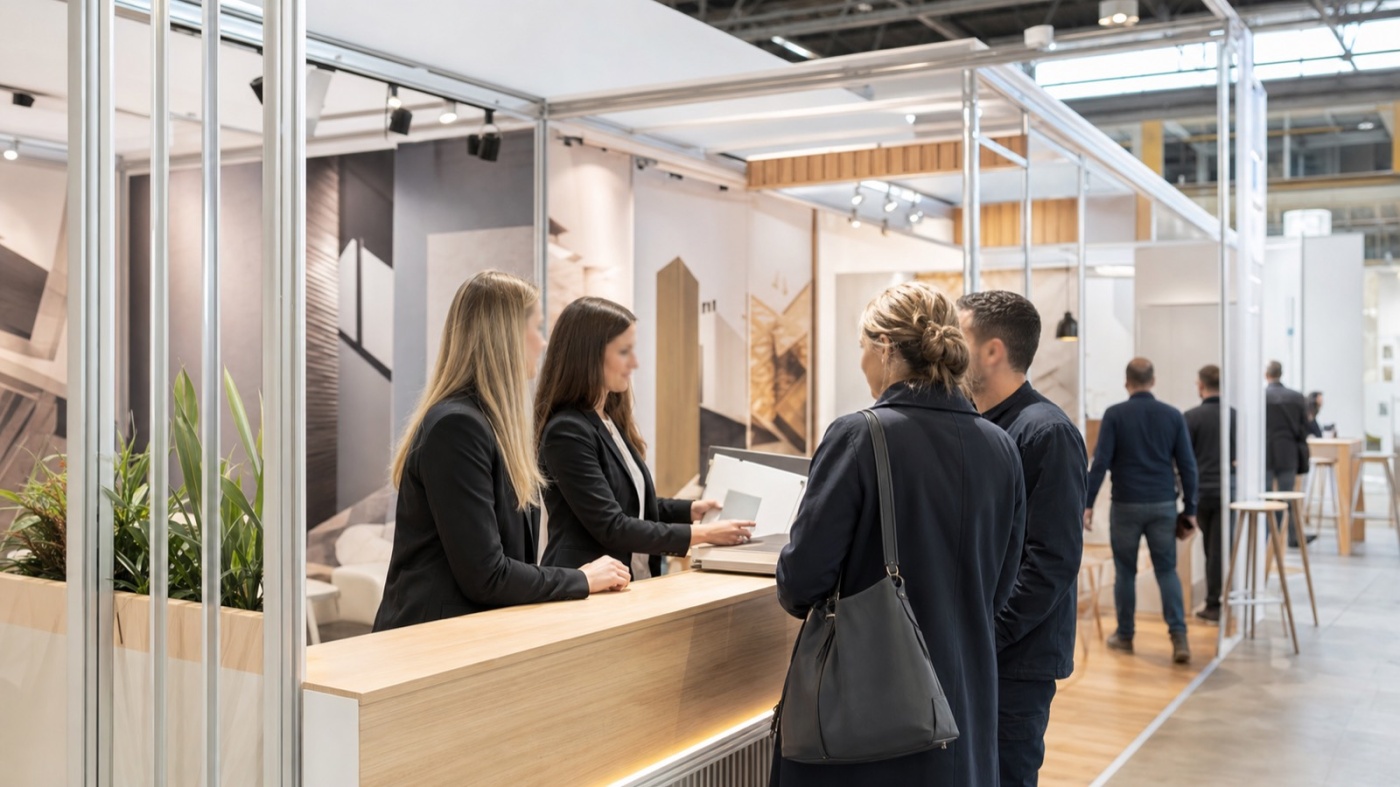
The stand is built, the exhibits are in position, the aisles begin to fill. From this moment on, everything rests on the people standing in front of the counter. Stand staff is the one item in a trade fair budget that listens, asks follow-up questions and books the next appointment on the spot.
Who belongs on the stand
Selection starts with a candid question: which conversations should happen during these days? A presence aimed at existing accounts calls for people who know the projects and the history. A presence that opens new markets thrives on colleagues who approach strangers and establish relevance within thirty seconds.
Three roles have proven their worth in combination. Sales leads and qualifies conversations. Engineering answers the detailed questions that otherwise stall a promising discussion. Management stays visible during peak hours, because many decision makers come looking for exactly that contact.
External support complements the team well as soon as responsibilities are clear. Hosts and promoters handle reception, refreshments, cloakroom and first orientation. Technical advice stays with your own people, since product knowledge grows over years and is hard to replicate in two days of preparation.
At international shows, settle the language question early. A team that speaks confident English opens conversations that would otherwise end right after the greeting.
How many people your stand carries
The industry rule of thumb is one person per ten to fifteen square metres of active stand space. Active means the areas used for conversation and presentation; storage, kitchen and cloakroom stay out of that calculation. Treat the figure as a starting point that your layout and your objectives adjust.
Build movement into the plan as well. Everyone takes a break, sits down for a longer meeting or walks a guest across the hall. Two additional colleagues per shift keep the floor covered during those moments.
Architecture drives the number too. An open corner stand with two visitor sides absorbs more staff than a row stand with one clear front. A meeting room, a bar and a presentation point are separate stations with their own crew. Planning floor space and team size together rather than one after the other pays off, and that is where our exhibition stand services begin.
The briefing before the first shift
A good briefing fits on a few pages and gets talked through once more on site. It holds the objectives in numbers, the three core messages, the target visitors by name, the new products with their arguments, and a clear rule on who quotes prices and who commits to an offer.
Add the practical layer: dress code, travel and passes, break times, where bags are stored, contacts for technology, catering and stand construction. One sheet with the hall plan, stand number and the mobile numbers of the stand manager saves a lot of searching during show days.
The most effective part takes half an hour: rehearsal. Two rounds of role play with typical visitor types create more confidence than any slide deck. Afterwards everyone knows how their opening line sounds and where to take a guest who wants technical depth straight away.
A conversation guide instead of a script
A guide sets four stations and leaves room for personality in between. First, the approach: an open question that starts from the exhibit, ideally paired with an observation. Second, qualification: task, use case, time frame, responsibility. Third, relevance: an answer that matches the task just described. Fourth, the close: one concrete next step with a date and an owner.
Documentation belongs in the conversation while it is fresh. Record what the visitor wanted and what was agreed. Contact details are captured with the explicit consent of the person in front of you, visibly and transparently. Our page on trade fair lead capture shows how that works quickly and cleanly.
The friendly exit matters just as much. When a contact belongs somewhere else, point the way promptly. That frees the floor for the conversations that serve your objectives, and the visitor remembers your company as helpful.
Shift planning and busy hours
Three to four hours in a row is the point where attention noticeably fades. Plan shifts of that length with staggered changeovers, so experienced people remain on the floor throughout. A short handover at every change keeps information inside the team.
At most trade shows the busiest window runs from late morning to early afternoon. That is where the full team belongs, while the edges of the day run on a smaller crew. The final day deserves attention in the plan, because it often produces calm and remarkably productive conversations.
For busy moments, agree on an order of play. Anyone waiting is greeted, offered a drink and given a realistic time. A second colleague handles short enquiries while the first finishes the running conversation in peace. A firm appointment for the following day often beats a discussion held under time pressure.
Keep ten minutes free each evening for a quick team round: what worked, which question came up repeatedly, which contact deserves attention tomorrow. Those notes turn into your follow-up almost by themselves.
Stand staff as a plannable building block
Stand staff behaves like a component of the stand itself: it can be planned, briefed and rehearsed. Teams that prepare roles, coverage and conversation flow with the same care as graphics and technology get considerably more out of the same floor space.
If you are planning your next appearance and would like floor plan, functional areas and team size considered together from the start, talk to us. We will show you which stand solution suits the way your team works.