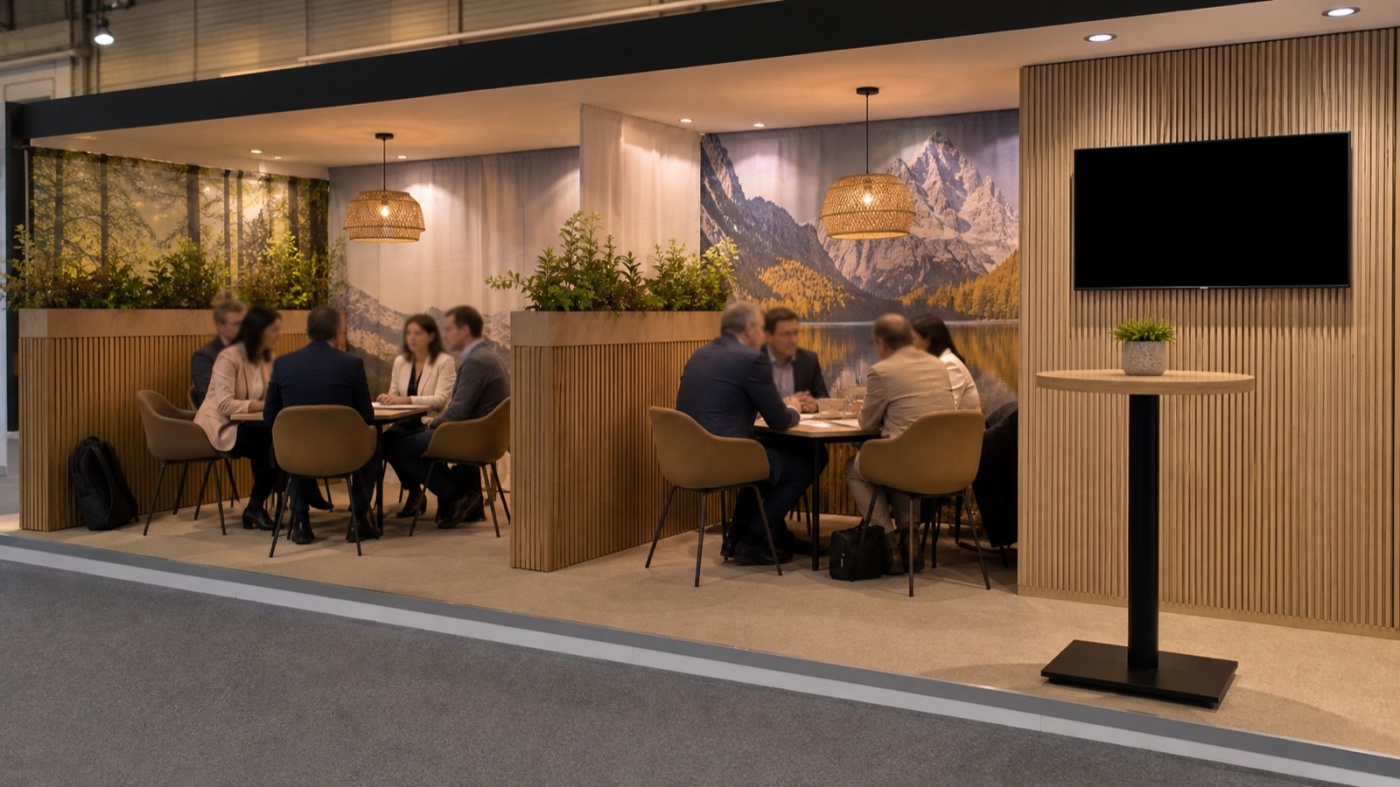
Anyone travelling to ITB in Berlin tends to arrive with a full diary before the halls even open. Suppliers from more than 170 countries negotiate here with buyers, tour operators and platforms, and the return on the appearance is earned in the rhythm of scheduled meetings. A stand at ITB is therefore first of all one thing: a very well organised workplace.
Three days in which every appointment counts
ITB Berlin has been a trade-only event for several years now. The running time is compact, and the audience consists of people with a buying, sales or partnership mandate: tour operators, travel agency chains, hotel groups, airlines, cruise lines, destination marketing organisations, technology providers and specialist media.
Halls are arranged by world region and complemented by market segments including Travel Technology, Business Travel and MICE, adventure travel, luxury and medical tourism. Many countries appear with large joint stands hosting dozens of co-exhibitors on their own small plots. For the 2027 edition, Messe Berlin is reorganising the hall layout and bringing the CityCube more fully into the show; the binding allocation of your space comes from the organiser.
This structure shapes the whole plan. The value of your appearance grows out of scheduled appointments, the conversations in between and what happens in the days afterwards. Passing visitors remain welcome, yet they carry a smaller share of the result than at a consumer show.
How many people your stand genuinely supports
Staffing levels can be calculated rather than guessed. Start with the number of meeting places. A table running on a 45 minute rhythm carries roughly nine to ten appointments across a show day. Two tables therefore call for two people leading conversations, plus one person welcoming visitors at the aisle and one reserve for breaks, delayed guests and spontaneous enquiries.
The shift plan grows from that figure. Experience suggests sending each person into conversations for a maximum of six hours at a stretch and writing breaks firmly into the plan rather than leaving them to chance. Anyone present all day long holds weaker conversations in the afternoon than in the morning.
Three roles deserve a clear owner. Reception addresses passers-by, sorts them and hands them over. The specialists lead the substantive conversations. One person with authority stays available for terms and commitments, reachable by phone as a minimum. With an audience from 170 countries, the languages on your team are worth a second look: English carries almost everything, while Spanish, French and Arabic open additional doors depending on your target market.
A short briefing the evening before pays off across the whole show. It settles who stands where and when, which three messages every conversation carries, how contacts are recorded, where the material is kept and who closes the day.
Meeting places that keep your team free to work
The floor plan follows the appointment schedule. If one table carries nine to ten conversations a day, the number of tables governs the return on the whole appearance, and the design falls into line behind that figure.
Half-height dividers between tables give parallel conversations room to breathe. Fabric panels and carpet absorb sound far better than smooth surfaces, which in a busy hall makes the difference between understanding a sentence and asking for it again. A storage compartment per table, a socket for laptops and water within reach keep the rhythm steady.
Behind the meeting zone belongs an enclosed area: cloakroom, room for guests' suitcases and trolley cases, drinks supply, chargers, cleaning kit and a stool for a moment of quiet. Many ITB visitors travel through the halls with luggage, and a safe place to put it sends a strong signal of hospitality.
Towards the aisle the stand wants an open edge with standing space. This is where people arrive spontaneously while the tables are busy. A high table, a screen showing your core offer and one person who guides them politely turn waiting time into a qualified conversation or an appointment for the following day. Our project references show how such layouts work in practice.
Recording contacts with consent and qualifying them properly
Three days at ITB produce a large number of contacts. Their value is decided in the moment of capture.
Consent is the starting point. The badge scan or business card enters your system once your counterpart has agreed and knows what you will use the data for. One sentence covers it: "May I record your details so I can send you the documents next week?" That question also qualifies, because agreement signals genuine interest.
Alongside the name, record three to five structured details: the request in keywords, the target market or region, the time horizon, the agreed next step and an assessment of priority. A short form on a tablet or a prepared sheet per conversation is enough. Timing is what matters: the note is written during or immediately after the meeting, because by the evening twenty conversations blur into a single impression.
Build in a fallback. Paper sheets with the same fields keep working even when the wireless network in a crowded hall runs at full load. And reserve ten minutes at the end of each show day for a team round: what worked well, which contacts take priority, what changes tomorrow.
What the week after Berlin decides about your appearance
Follow-up starts the day after dismantling, while your counterpart still remembers your face and the conversation. Sort contacts into three groups: concrete enquiries with a date, medium-term interest and general information. The first group receives a personal message with the agreed next step, the second a short summary with an offer to call back, the third your newsletter.
The same data produces your success calculation. Total cost of the appearance divided by the number of qualified contacts gives cost per contact, and a review after six and twelve months shows what share turned into business. That figure carries the budget discussion for the next edition and makes clear which stand size earns its keep.
Dates for the coming editions are listed in our trade fair calendar. If you are planning your space for the next ITB Berlin, send us your stand size and objectives and we will design the floor plan consistently from the meeting table outwards.