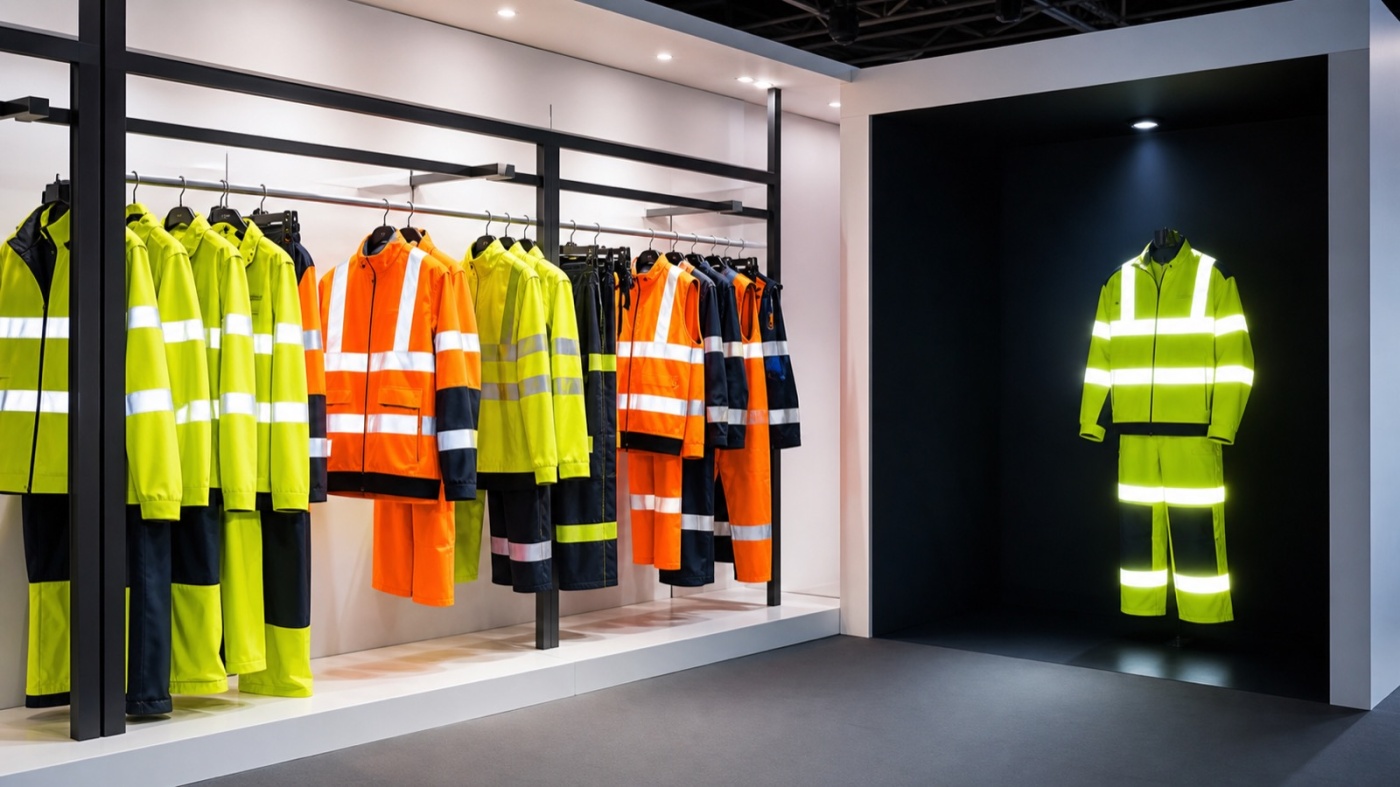
Few trade fairs put as much material into one hall as A+A in Düsseldorf. Personal protective equipment, corporate fashion, technical fabrics and components sit side by side, and almost all of it lives from colour, surface and grip. Exhibiting here means presenting a sensory impression rather than a product photo.
A trade fair where safety becomes visible
A+A is the world's leading trade fair for safety and health at work and takes place in Düsseldorf every two years. Its scope runs from personal protective equipment through corporate fashion and operational safety to fire protection, emergency management and the fabrics and components behind all of it. Alongside the exhibition, the organiser stages a specialist congress and themed areas covering topics such as exoskeletons or workwear trends. Our trade fair calendar lists the coming editions in 2027, 2029 and 2031, with exact dates confirmed by the organiser.
The audience matches that breadth: occupational safety specialists, safety officers, company physicians, purchasing departments, HR teams, works councils and specialist distributors. One habit unites them, and it shapes stand design: at A+A, visitors touch things. The glove goes on the hand, the boot on the foot, the helmet on the head. Whether a workforce enjoys wearing the equipment weighs heavily on the purchasing decision.
That puts two design tools centre stage that play supporting roles elsewhere: light, and the materials around the product.
Why high visibility colours deserve their own lighting plan
High visibility garments depend on fluorescent dyes. They glow because the fabric absorbs short wavelength light and returns it as visible yellow, orange or red. When that short wavelength content is missing, the same jacket looks flat and dull. Warm white spotlights, popular in lounge areas, take from a hi-vis vest exactly the effect it is bought for.
Areas showing high visibility clothing therefore call for neutral white to daylight-like light with a high colour rendering index. The difference is obvious the moment two identical vests hang under two light colours, which incidentally makes a neat live demonstration on the stand.
Colour accuracy pays off for a second reason. Buyers compare dye lots, and brands expect their corporate colour to appear correctly on corporate fashion. Coloured ambient light shifts both. Keep coloured lighting moods where they add value: on walls, graphic panels and the logo area, while the goods themselves stand in clean white light.
Retroreflective tape only reveals itself in directed light
Retroreflective strips behave differently from fluorescent colours. They send light back towards its source. The effect becomes visible only when the light source sits close to the viewer's line of sight, much as a car headlamp sits close to the driver's eye.
For stand design the conclusion is straightforward. Spotlights aimed purely downward leave reflective tape dark. The effect appears once additional light sources shine along the aisle direction onto the goods, roughly at eye level or slightly above.
A dedicated darkened zone works even better. A niche with a dark background where visitors handle a torch themselves makes the difference between two reflective qualities clear within seconds. Such zones use little floor space and often deliver the best conversation starter on the stand.
One counterpart deserves attention: glare. Safety glasses, visors, painted helmet shells and metal fittings bounce light sharply. Louvred spotlights, baffles or reflectors, matt backgrounds and a flatter beam angle keep the presentation comfortable.
Materials that invite people to touch
Selling protective equipment means selling trust in a fabric, and that trust arrives through the hand. Display surfaces at grip height, open racks in place of closed showcases and a proper fitting area therefore belong to the basics. A shoe bench with a mirror, a seat and a shelf for bag and coat extend the conversation by valuable minutes.
The background shapes the effect as much as the product. Calm, matt surfaces in muted tones let signal colours step forward, while glossy finishes compete with them. Textile panels absorb stray light and soften the acoustics of the hall, whereas wood and oiled surfaces bring warmth to a product world that otherwise reads as purely technical.
Material contrast tells a story of its own. A rough workbench top next to a finely knitted glove reveals the delicacy of the yarn. This pairing carries through graphics, furniture and flooring.
The stand itself as a statement about materials
At a fair built around people at work, visitors look closely at what the stand is made of. Purchasing departments increasingly ask about the sustainability of marketing services, now that reporting duties apply to larger companies. A stand made of reusable aluminium frames with textile skins and LED technology answers that question through its construction. Our page on sustainable exhibition stands explains how that works in practice.
Modular construction brings a further benefit for lighting. Luminaires clip into the frame profile wherever they are needed and move to new positions between editions, graphics change, the structure stays. For a fair on a two-year cycle that adds up nicely.
Two technical points belong on the list early: the power load for lighting including heat build-up in the hall, and the question of whether trusses or luminaires will be suspended. Rigging and special constructions follow the technical regulations of Messe Düsseldorf and need lead time for review and approval. The applicable deadlines and values are published fresh by the organiser for each edition.
When the product gets the stage
A lighting concept for A+A grows out of the product range: neutral white light with high colour rendering above textiles and hi-vis wear, directed sources along the aisle for reflective materials, a dark zone for the moment of surprise, and matt, calm materials as the stage. It sounds elaborate, yet it asks mainly for thought during planning and a modest amount of hardware on site.
There is time before the next Düsseldorf edition to work through these points calmly, ideally on a model and in 3D, long before the first luminaire is ordered. If you would like to review your range and your floor space together, our exhibition stand services show how we accompany a project from the first sketch to dismantling.