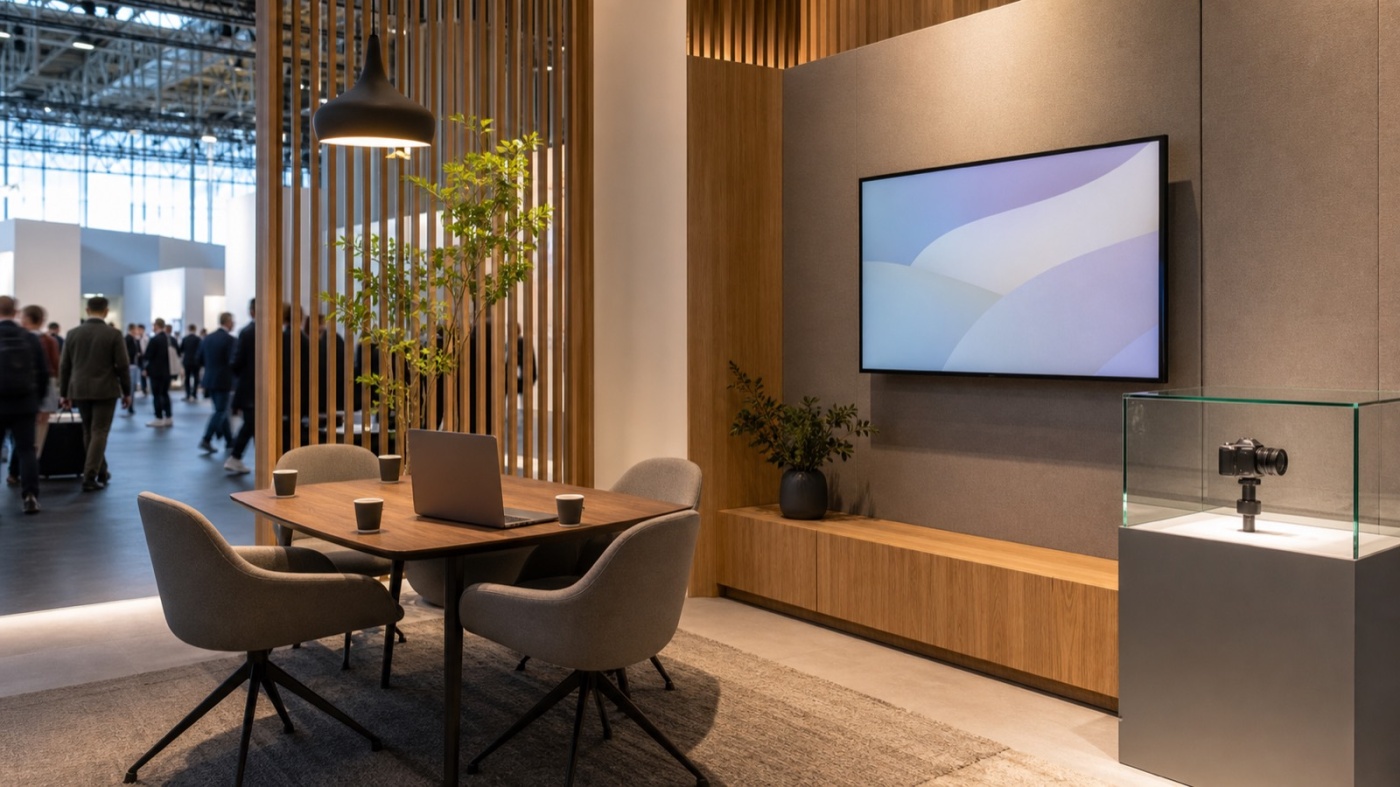
Most exhibits at Vision fit in one hand: cameras, lenses, sensors, lighting modules and software on a laptop. The decisions behind them need considerably more room, because a machine vision system gets specified, calculated and, where it matters, tested against a real part. At the world's leading trade fair for machine vision in Stuttgart, one question therefore carries the day: how many good conversations does your stand have room for?
A specialist audience that stays a while
Vision runs every two years in Stuttgart, with the coming edition from 6 to 8 October 2026 and further editions in 2028, 2030 and 2032. For the 2024 edition, Messe Stuttgart reported a record 483 exhibitors from 38 countries and around 8,000 trade visitors. The crowd is small next to a consumer show, and exceptionally well qualified.
The exhibition profile is split into systems and components, applications and services. In front of your stand you will find application engineers, developers, system integrators, quality managers and research teams. Nearly all of them arrive with a specific case: a part to be inspected, a cycle time to hold, a surface that is demanding to image.
That produces a different conversation curve from a consumer goods fair. Instead of two minutes of passing attention, you get a technical discussion of twenty to forty five minutes, often involving a laptop, a datasheet, a sample part and a sketch on paper. A stand designed around that curve gathers more qualified contacts each day than a pure display surface.
The table question: how much seating your stand carries
Work backwards from the conversations rather than from the square metres. How many colleagues travel with you, how many talks run in parallel during the busy morning hours, and how long does a typical talk last? Those three figures give you the number of seats, and the seats give you a sensible stand size.
A compact in-line stand often works with one high table, two stools and a slim shelf for sample parts. From a medium footprint upwards, a seated table for four earns its space, because specifying a system is easier sitting down. Standing height and seated height serve different purposes: the high table carries the five minute exchange, the seated table carries the project discussion.
Technically, every meeting place deserves a power socket and a screen at eye level beside the table, so everyone looks at it together rather than across it. A small plinth for a customer sample within reach completes the setup. How additional meeting space affects the budget is explained on our page about exhibition stand cost.
Three conversation depths, three zones
The open zone sits along the aisle edge. This is where the live demo belongs: a camera, a moving part, a screen showing the result in real time. It answers the first question in passing and invites people to stop.
The semi-open zone sits behind it. A table with a half height panel or an acoustic element at your back stays visible from the aisle while already feeling sheltered. This area carries the bulk of your fair conversations, because it combines closeness and calm with an open approach.
The closed zone completes the layout: a meeting room with a door for roadmaps, pricing and confidential topics. It belongs at the rear or against the neighbouring wall so the valuable aisle frontage stays open. Felt, carpet and stretched fabric bring the sound level down noticeably, which is worth a lot at a fair full of running demos. When dividing the space, check the technical regulations of Messe Stuttgart for the respective edition, for example on dividing walls and building heights.
Hospitality as the opening move
A coffee is the most elegant conversation opener Vision offers. It gives visitors a good reason to stay put and gives you the first thirty seconds in which the application becomes clear. A visible espresso machine with a person behind it feels far more welcoming than a pot on a shelf.
In practice, coffee and water throughout the day, something small in the afternoon and enough chilled storage work well. Plan counter space, connections, a washing-up option and waste separation from the outset; the organiser's rules on catering and services cover the detail. Staffing belongs in the plan too: one person greets and pours while your specialists stay free for the technical talks.
Whatever you take away from a conversation is captured openly and with agreement. The badge scan happens once your guest has said yes, and the note about the application is written visibly at the table. That approach suits an audience that prefers details over forms, and it produces clearly better leads after the show.
Scheduling across three show days
The supporting programme draws attention. The fair's lecture forum counts as the largest of its kind for machine vision, joined by panels, start-up pitches and the VISION Award ceremony. Building your own schedule around that programme opens up quieter windows at the table.
Arrange appointments before the fair through a calendar link and reserve the seated table at peak times for booked guests. The third day traditionally runs calmer and suits long specification talks. Upcoming editions and further dates are listed in our trade fair calendar.
Order value grows at the meeting table
At Vision, order value is created at the table. Stand planning that treats seating, zones and hospitality as sales tools turns three show days into a full project list. If you are preparing your appearance in Stuttgart, we are glad to lay out the zones with you: request an exhibition stand.