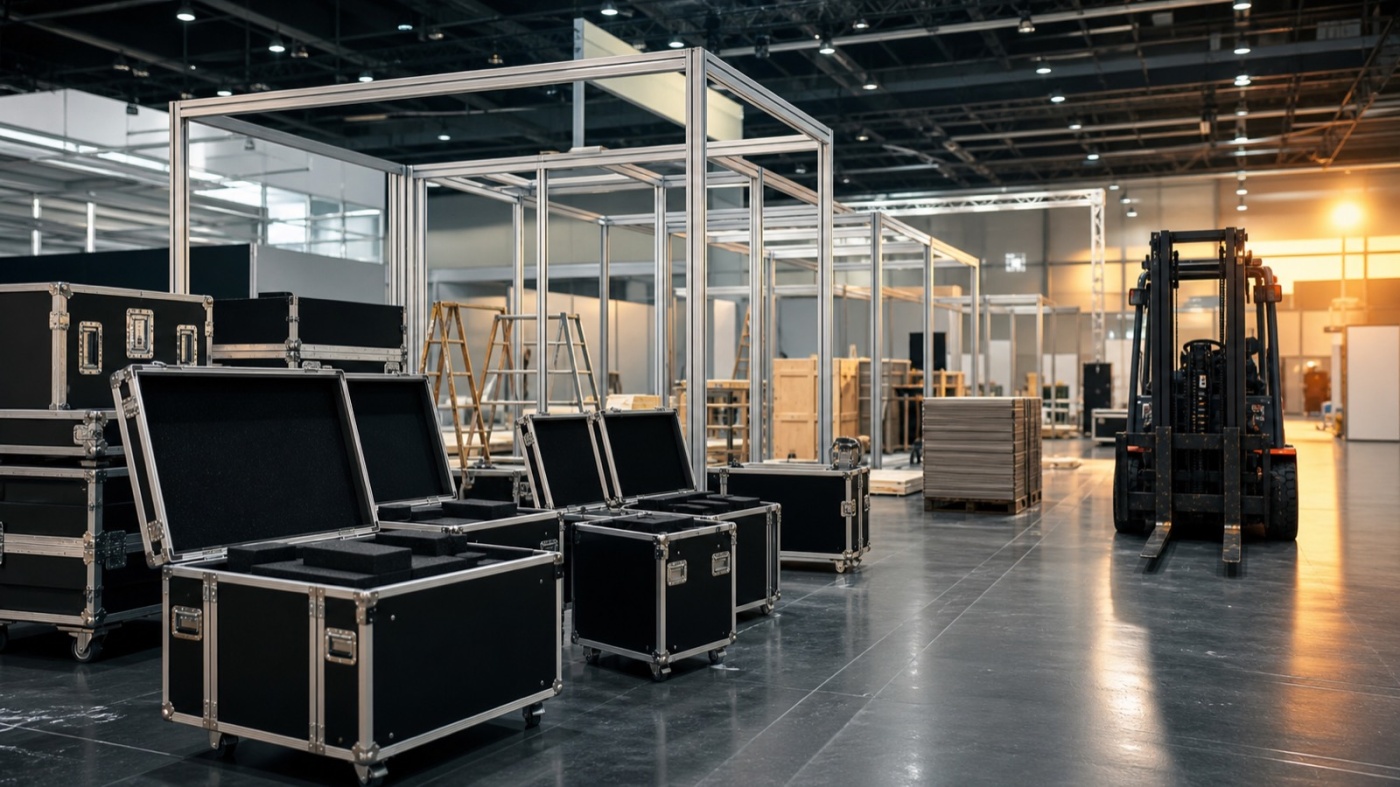
An exhibition stand is created twice: once on screen and once on a truck bed that arrives on time at the right hall. At IFA from 4 to 8 September 2026 the second part carries particular weight, because around 1,800 exhibitors build up simultaneously on a site in the middle of Berlin. Planning delivery early gives your team the most valuable resource of build-up day: calm.
An exhibition ground in the middle of the city
Berlin ExpoCenter City surrounds the Funkturm radio tower, embedded in a grown urban structure with housing, the ring railway and an urban motorway. IFA occupies roughly two dozen halls there plus the CityCube at the southern entrance, complemented by the Sommergarten as an open air area with a stage programme. Historic hall rows, modern extensions and outdoor spaces sit close together.
That location brings its own logic. Access roads are limited, manoeuvring space is tight, and routes across the site pass through narrow sections in several places. At the same time the halls differ in age, so ceiling heights, gate openings, floor load capacity and drive-in access vary from hall to hall. These figures appear in the technical guidelines and hall data published by Messe Berlin for each event, and they belong right at the start of your planning.
One early question always pays off: does the planned component fit through the gate of your hall, and does the floor carry the intended point load? Answers to that reshape a design far more easily in May than during build-up week.
Loading zone slots: the rhythm of delivery
Messe Berlin manages build-up and dismantling traffic through booked loading zones with time slots. Access to the grounds during these phases requires registration for the event and a booked slot, reserved through the area management system of the venue. A service fee applies per time unit, and the venue states the current amount for each event.
The purpose of the system is pleasantly tangible: instead of a queue at the gates, traffic spreads across the day. For your planning that means three things.
First, book slots as soon as they open. Attractive windows early on the morning of the first build-up day go quickly.
Second, plan realistic unloading times. A slot describes the time at the loading zone rather than the entire build-up. Everything you have already sorted inside the vehicle shortens this phase noticeably.
Third, plan the way back. The vehicle leaves the site promptly so the next slot becomes free, and it needs a parking option outside the grounds.
Sequence on the stand space shapes the whole day
Once material sits on your space, sequence takes over. This chain has proven itself: level the floor and define cable routes, erect the load bearing structure, pull electrics and data lines, fit wall panels and graphics, place furniture and technology, then final cleaning.
Two items deserve extra attention at IFA. One is the electrical installation, because a consumer electronics stand feeds many devices at once, which makes a documented connection plan including testing valuable. The other is screens and LED surfaces, which deserve time for calibration, content feed and a full test run. Both belong at the end of the second to last build-up day, so a complete day remains as a buffer.
In practice, a loading plan helps that assigns every crate to a position in the floor plan and to a build-up stage. Labelled transport boxes, a packing list and photos from the pre-assembly in the workshop save more time on site than any extra pair of hands.
Empties, storage and the journey home
Packaging and transport boxes take up space you want for visitors. Venues offer empties storage for this, usually through the official on-site forwarder. Booking early ensures that boxes return to your space on time on the final fair day.
For dismantling the same rules apply in reverse: book slots, define the sequence, secure technology first. A well planned teardown protects exactly those components you intend to use again at the next edition.
A build method that suits a tight schedule
A site with limited access rewards stands that arrive in manageable units. Modular aluminium frames, fabric graphics and LED tiles connect with minimal tooling, weigh little and fit into standardised transport cases. That shortens time at the loading zone, reduces the number of trips and makes build-up predictable.
There is an economic effect across the years as well: a system that is stored, inspected and reconfigured accompanies you through several trade fair seasons. What this means for budgeting and reuse is explained under exhibition stand cost, and an alternative for single appearances is described under rent an exhibition stand.
Logistical care buys back the final day
IFA asks its exhibitors for logistical care, and it rewards that care immediately. Booked time slots, a loading plan with a clear sequence, verified hall data and a build in transport friendly units let your team spend the final build-up day on refinement instead of improvisation. The current technical guidelines and traffic rules of Messe Berlin always apply. If you are planning build-up for a coming edition, an early look at our trade fair calendar and a conversation about transport and assembly set the pace.